
Marketing your course
Avoid relying solely on public enrollment enrollment to fill a course. If you don't have enough in-house students or staff to meet the minimum contract enrollment, seek to partner with other agencies and use public enrollment to top-off your course. WMTC posts all courses on our website. Licensed Providers may also post your course on their outlets if it's open to the public. Local advertising and word-of-mouth helps a lot, especially if you plan ahead. To help reach your maximum enrollment, promote your course in as many of the following ways as possible:
- Instagram, Facebook, and other social media outlets - tag/mention WMTC in any relevant post (@wmtcinternational on Instagram and @WildernessMedicineTrainingCenter on Facebook), and we will share your post on our sites.
- In-house email and website posts
- Posters or flyers and announcements at local establishments (e.g. gear shops, climbing gyms, pubs - wherever you anticipate potential students may be, etc.)
- Email blasts to local contacts (e.g. heads of outdoor programs, summer camp coordinators, managers of guide services, former WMTC students, etc.)
- Local radio, TV, newspapers or blogs. Some outlets may be willing to schedule a visit to the course to video a skills lab or simulation and chat with students. You may even be able to get a copy of the video to help promote future courses.
Managing enrollment and registration
While Sponsors may have internal systems for this (e.g. for academic courses), they are also responsible for managing registrations through our WMTC's registration system. This includes watching that enrollment doesn't exceed course maximums and that students get prompt confirmations of their registration and online access for hybrid courses. WMTC office staff will give each sponsor a thorough orientation to our system prior to registration opening. Details can be found on the Sponsor Resources page (for current Sponsors).
Distribute Student Course Materials
Distributing course materials to students during the Online portion of a hybrid course.
Student Communication
Communicating promptly, clearly, and effectively with students in the course, the WMTC Licensed Provider, the WMTC office and any other parties involved (e.g. people at the venue where the course will be held).
Collecting Student Payments
Setting prices and collecting payment. Public tuition must be within WMTC's public tuition range. Tuition for a sponsor's staff or students may be discounted from the public range. Sponsors may charge an additional fee for lodging, camping, and meals. Colleges and universities may charge an additional fee for credits. Specifics on tuition and fees for courses in the United States can be found here and on the Sponsor Resources page (for current Sponsors).
Pay the Licensed Provider
Promptly paying the WMTC Licensed Provider the contracted deposit pre-course and contracted tuition once the course is complete. Licensed Providers will invoice sponsors according to their contract and course minimums after a course; this includes instructor expenses.
Locations and equipment
Providing classroom & simulation sites and sponsor equipment. Requirements for this are outlined below. Sponsor equipment or facilities may be rented separately or negotiated with another organization for spaces in the course. For example, a sponsor may trade space in the course for classroom and simulation sites from a city, park, school, etc. They may also trade space in the course for required equipment borrowed from an outfitter, program, SAR unit, etc.
Site, Classroom, & Equipment Requirements
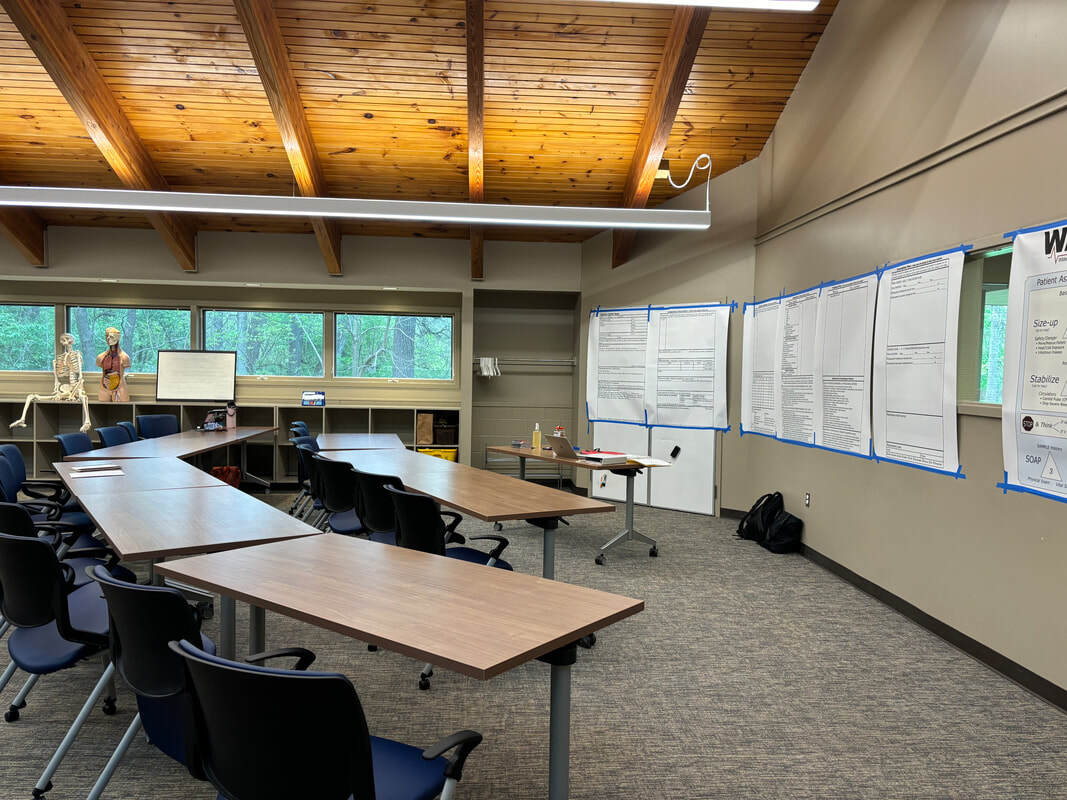
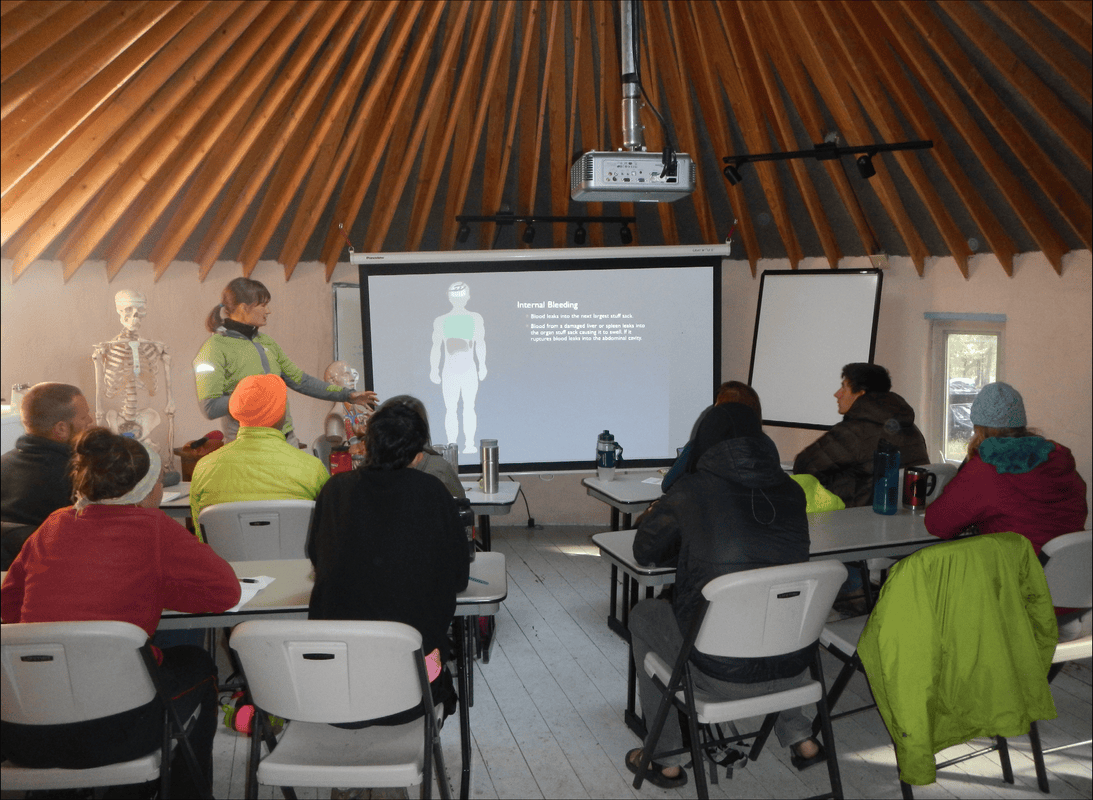
- Indoor classrooms should be large enough for students, desks or tables, chairs, and course gear. It should be a space with good lighting and shades for use of a projector for lectures for all standard courses and video debriefs for all WFR courses. Be sure to identify power sources for audio/visual equipment including extension cords.
- It should also be quiet with good acoustics. There should be enough restrooms to accommodate the class size nearby as well as a private space to change into simulation clothes (may also be in the restroom).
- The space should be large enough (or have additional space nearby) for indoor skills training if the weather is poor. This space should have open floor space free of furniture for the entire course to sit or lay down for skills practice.
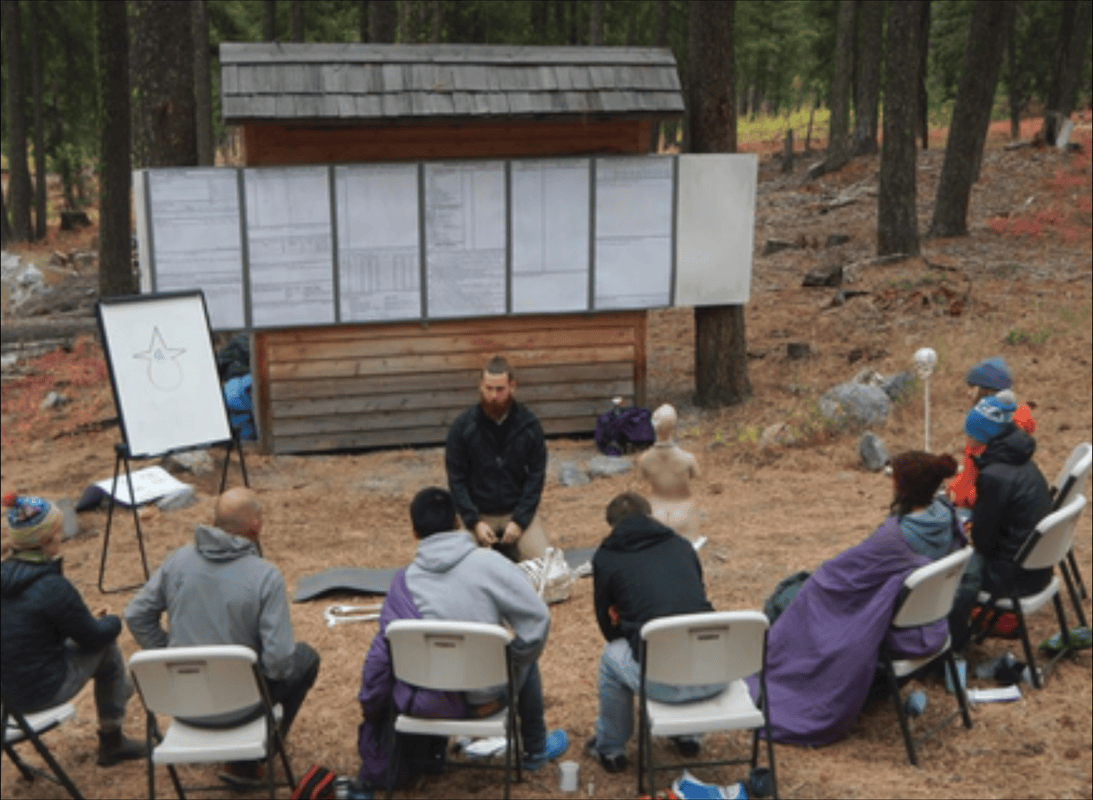
- Courses may also be taught outside or on an expedition. In this case, large tarps, a roofed shelter, or excellent weather is required. Keep in mind that projector use requires some form of electricity (solar, generator, etc.) and a powerful bulb if used in daylight. Courses can be run without electricity in a field setting; please discuss potential trade-offs with your provider or the WMTC office before signing a contract.
- All simulations will be outside. If possible, simulation sites should contain varied terrain: rocks, wooded areas, steep hills, lakes, streams, rivers, etc. Transportation may be required if the areas for simulations are not within a short walk (less than fifteen minutes). WMTC instructors can not transport students.
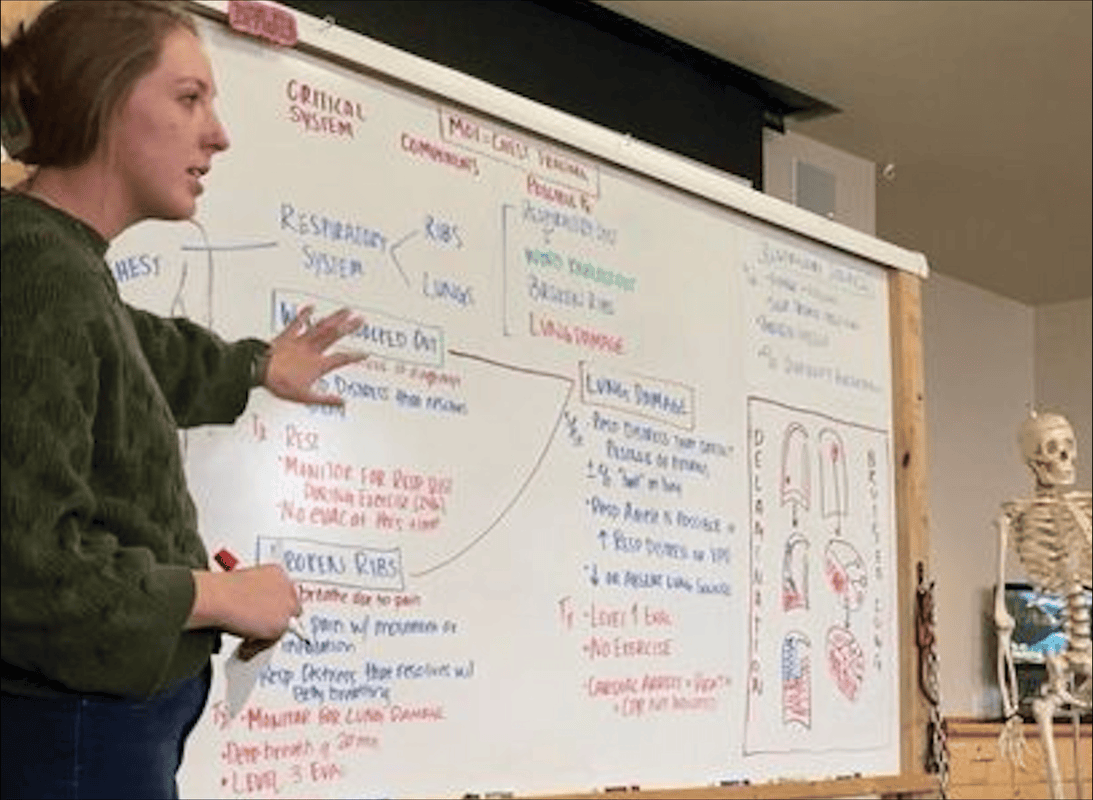
- Instructor(s) will need a large 4' x 8' whiteboard with 4 new dry erase markers. Many campus classrooms have these built in. Note: a chalkboard is not sufficient. If your facility does not have a whiteboard of this size, they can be purchased cheaply at any lumber supply store that carries white sheets of tub & shower wall board (take a dry erase marker to test). For increased strength, the wallboard may be attached to a 1/4" sheet of particle board or plywood. Teaching with a whiteboard of this size permits flexibility within a lecture, usually provides a complete picture of the topic without erasing, and allows lectures to be held outside in good weather.
- Portable 2' x 3' whiteboard and stand are helpful for small drawings to emphasize content, alerting people nearby of a simulation, or daily schedules.
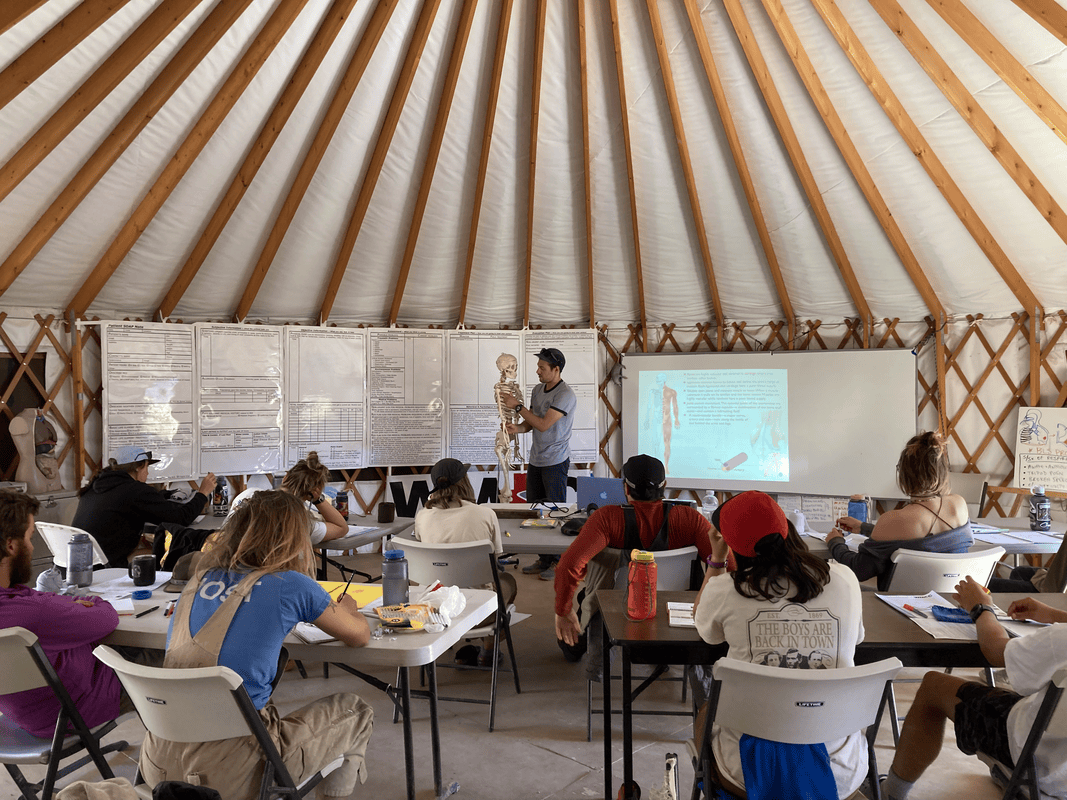
- Instructors will bring large (3' x 4') SOAP and PAS posters to hang from the walls to teach patient assessment and debrief simulations and case studies. Ideally, the classroom should have ~20 ft of clear wall space for these posters. They are typically attached using painter's tape, gaff tape or duct tape, depending on the surface. Sponsors can supply multiple rolls of the tape they prefer to be used on the walls.
Classroom & Site Checklist
- Adequate classroom space for students at desks or tables & chairs
- Restrooms & changing space nearby
- Sheltered space for skills training
- ~20ft of clear wall space for SOAP posters
- Multiple rolls of whatever tape you prefer to be used on your walls
- Projector with enough lumens to use in your space during the day for all standard and WFR courses
- Power source for audio/visual equipment including extension cords (if in a field setting, discuss not having electricity with your provider)
- Projection screen appropriate to class size (whiteboards can double for these in some cases if there is no glare)
- Large whiteboard (4' X 8')
- Small whiteboard (2' x 3') & stand
- Four new colored dry erase chisel tip markers (red, blue, black, green)
- Transportation to and from simulations or off-site activities if needed. WMTC instructors can not transport students.
Required Medical & Rescue Gear
We don't recommend that students bring their personal gear with them for use during the course. It is very hard to ensure that the equipment will suit the course needs and be functional. We also don't want individuals to use the gear they're depending on for the course (e.g. it is very unpleasant and potentially risky to use a sleeping bag that has been soaked during a simulation earlier that day.) Much of the gear below will be used in several different labs. Refer to the course types in bold for what's required for each medical course. You may be able to rent equipment from your licensed provider - talk with them directly for details and pricing.
Full-sized Anatomical Torso & Skeleton
All Courses. Our instructors have a full-sized anatomical torso and skeleton that they can travel with. These teaching aids are required for students to fully grasp three dimensional anatomy. If your instructors need to fly to your course site, you can save extra baggage or shipping charges by borrowing an anatomical torso and plastic skeleton from the biology or health sciences department at your local college or university. If you are a regular sponsor, you may wish to purchase one of each for future courses; they typically pay for themselves after 3-5 courses (decorative halloween skeletons are not anatomically correct and do not work for WMTC courses).
General Equipment
- Closed-cell foam pads: 1 per 2 students for WFA & WAFA courses, 9 minimum for WFR courses
- Sleeping bags: 1 per 2 students for WFA & WAFA courses, 9 minimum for WFR courses
- Tarps, Tyvek sheets, or plastic sheets (min. size: 8 x 8 feet): 1 per 2 students, 9 minimum for WFR courses
- Internal frame packs: 1 per 2 students (if available - packs are nice for containing the gear above during simulations)
- Hand sanitizer (for student use between skill labs and simulations to help prevent spread of disease
- Sanitizing wipes to clean face masks and suction syringes between uses
Simulations
- 2 pairs of long pants (might get cut & stained)
- 2 long-sleeved shirts (might get cut & stained)
- 1 T-shirt to be cut and used for a cloth roll in splinting labs
- 1 pair full-height thick socks for use in splinting labs (will not be cut or stained)
Course-specific equipment
Different course types include different labs and simulations that require unique equipment. See the descriptions below for the required equipment.
| WBLS | WFA | WAFA | WFR | WEMT | RECERT | |
| Advanced Extremities Splinting Lab |  | | | | ||
| Wounds Lab | | | | | ||
| Spine Management Lab | | | | | | |
| Improvised Litters & Carries Lab | | | | | ||
| Optional Critter Parts Lab | (Opt) |
Advanced Extremities Splinting Lab
- Duct tape: 1 roll per 10 students, 2 rolls minimum
- Tent poles: 1 set per 5 students, 2 sets minimum
- Ski or trekking poles: 8 per course
- Internal frame packs: 1 per 5 students, 2 minimum (may be the same packs as above in the General Equipment)
- 1" webbing and/or cam straps (assorted lengths 4' - 10', 20+ pieces)
- Optional: Commercial Sandwich Splint: 1 per course (use in WFR or WEMT only)
- Optional: Snowshoes: 1 pair per 10 students, 1 pair minimum (use in WFR or WEMT only)
Wounds Lab
- Pig's feet: 1 per two students plus a demo
Spine Management Lab
Required:
- Stokes (wire basket) or similar rigid litter: 1 per 15 students, 1 minimum
- One 30-foot section of webbing or rope: 1 per backboard
- One 50-60 meter climbing rope for each litter and backboard
- For private courses that carry backboards rather than commercial litters or courses for river rafting companies that use camp tables as a base for improvising litters or place backboard caches at hazardous rapids: Long backboard: 1 per 7 students, 2 minimum
- 6" quick-draws or tied loops: 20 per course
- 1" camp straps for each backboard and litter
- SKED litter: 1 per course
- Full-body vacuum splint: 1 per course
Improvised Litters & Carries Lab
- 50-60 meter climbing rope: one per 7 students, 2 minimum
- Oars or long paddles (WFR/WEMT/Recert only)
Optional Critter Parts Lab
Standard WFR courses only. A nice addition to the Day 2 lectures in our Standard WFR courses are REAL lungs, heart, brain, and liver from a pig; please keep the organ block intact (epiglottis, trachea, lungs, and heart). Often a local butcher can save these parts for your course. Students often appreciate these visual aids. In addition please provide a long sharp kitchen knife and basin for each organ block. Please ask the butcher leave the heart whole and, if possible, attached to the lungs in a complete “organ block” with the trachea, larynx and epiglottis intact.